
The Real Difference a Multipoint Lock Makes on Your Front Door
You’ve probably seen them on high-end doors — entry hardware that locks in three places at once instead of just one. Multipoint locking systems are no longer exclusive to European imports or custom homes. They’re becoming one of the most requested upgrades in residential door hardware, and for good reason.
Here’s what you need to know before choosing one.
What Is a Multipoint Locking System?
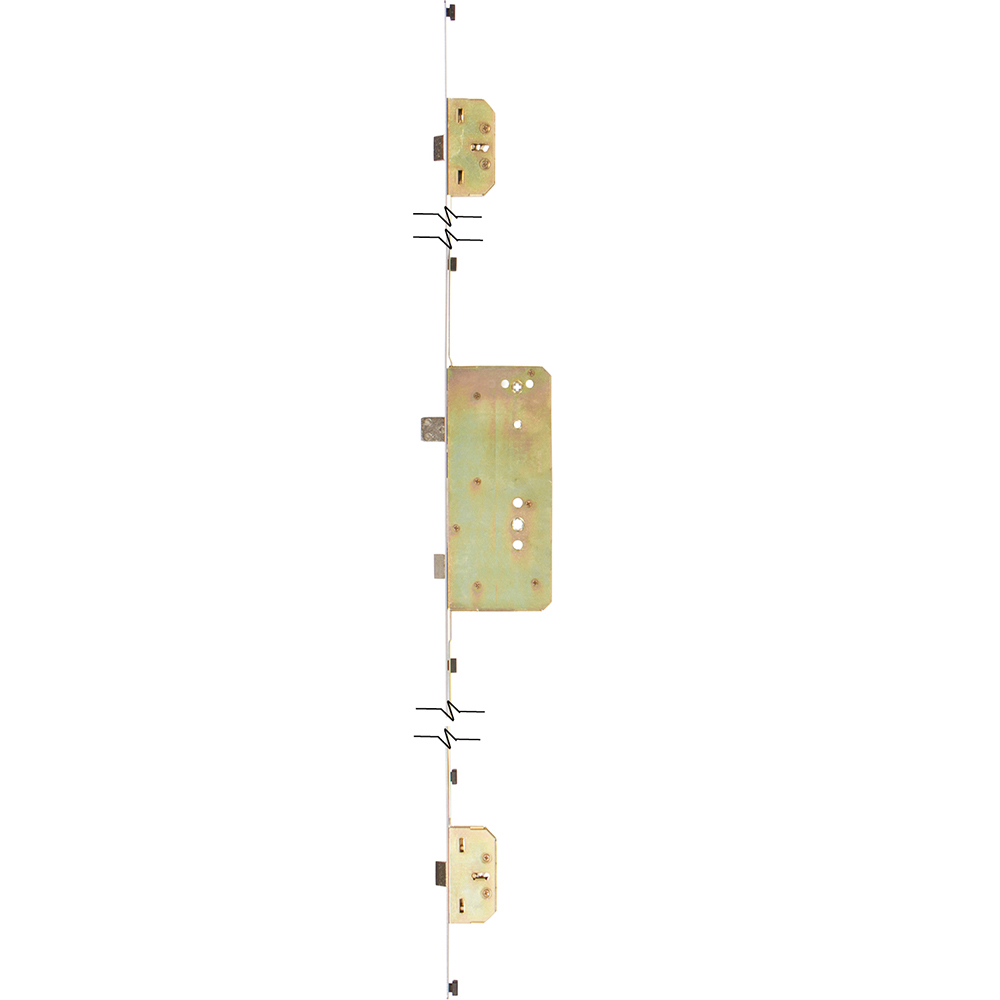
A multipoint lock engages at multiple points along the door frame simultaneously — typically at the top, middle, and bottom — when you lock the door. Standard single-point deadbolts lock at only one location, leaving the rest of the door edge free to flex or be forced. Multipoint systems eliminate that flex entirely.
Rockwell’s multipoint locks use triple-latch or deadlocking tongue mechanisms depending on the series. The center deadbolt is laminated steel — anti-saw, anti-jemmy, and kick-resistant. The result is a door that’s genuinely difficult to force open: not just harder than average, but structurally different in the way it secures the door frame.
How Rockwell Multipoint Locks Work — American Style
One thing that surprises many homeowners: most Rockwell multipoint locks operate exactly like a standard American deadbolt. There’s no new habit to learn.
With the 7222 Series (XL22), 7010 Series (TL10), and 7322 Series (ST), you simply close the door and turn the deadbolt knob to lock — just as you would with any single-point deadbolt. All three locking points engage automatically with that one familiar motion. The handles do not need to be lifted prior to locking. This is the American-style locking operation that homeowners here are already comfortable with.
The Slimline 202 Series works differently, using a European-style mechanism where you lift the handle to engage all locking points, then turn the key or thumb turn to lock them in place. This is a common configuration on patio and garden doors with narrower door profiles. Both systems offer excellent security — they simply operate in a way that reflects the door type and application they’re designed for.
Why Homeowners and Builders Are Upgrading
The performance difference between a single-point lock and a multipoint system shows up in several practical ways.
Draft and weather resistance improves noticeably because the door is pulled tight against the frame at three points rather than one. Homeowners often notice a reduction in air infiltration and sound transmission as soon as a multipoint lock is installed.
Security is meaningfully enhanced. The laminated steel center deadbolt resists sawing and prying, and because the door is held at the top, middle, and bottom of the frame, there’s no single weak point a forced entry attempt can exploit the way it can with a standard single-bolt lock.
The overall feel of the door improves. A door secured at three points simply feels solid and well-built. That quality is something homeowners notice every day — and it’s one reason multipoint hardware has become a feature that production home builders use to differentiate their products.
Choosing the Right Series for Your Door
Rockwell’s multipoint lock families are each designed for a specific combination of door type, application, and locking style. Selecting the right one comes down to your door’s backset, profile, and the handle set you plan to use.
7222 Series (XL22) — 2-3/8″ backset, for standard American residential entry doors with a 5.5″ center-to-center double bore. Automatic triple latching, American-style deadbolt operation. Available in 6’8″ and 8’0″ door heights. Compatible with H433 and H435 series lever handle sets.
7010 Series (TL10) — 2-3/4″ backset, for fiberglass and steel entry doors where that backset is standard. Automatic triple latching, American-style deadbolt operation. Available in 6’8″ and 8’0″ door heights. Compatible with H433 and H435 series lever handle sets.
7322 Series (ST) — 2-3/8″ backset, with deadlocking tongues rather than a triple latch mechanism. American-style deadbolt operation. Available in steel and stainless steel for coastal applications. The most versatile series in terms of handle compatibility — works with the full range of Rockwell entry handle sets including H700, H300, H100, H433, and H435 series.
Slimline 202 Series — Designed for narrow-profile patio and garden doors where a standard triple latch body would not fit. European-style operation: lift the handle to engage all locking points, then turn the key to lock. Works with Rockwell’s narrow-style swing door handle sets.
Handle Set Compatibility — What You Need to Know
All Rockwell multipoint lock series are designed to work exclusively with Rockwell handle sets. Using non-Rockwell handles or modifying the handle set will void the warranty, and we don’t recommend it — the handle sets and lock bodies are engineered together to function correctly as a system.
Handle compatibility varies by lock series, so it’s important to confirm the pairing before ordering:
- 7322 Series (ST) — Compatible with the widest range of Rockwell entry handle sets, including the H700 (Lumina), H300 (Savoy), H100 (Winslow), H433 (Times Square), and H435 (Verano) series, among others.
- 7010 Series (TL10) and 7222 Series (XL22) — Compatible with handle sets that feature levers on both the interior and exterior sides. This includes the H433 (Times Square) and H435 (Verano) series. These lock bodies are not compatible with traditional grip/knob handle sets.
If you’re unsure which handle set works with a specific lock series, our product pages include compatibility notes, and our team is happy to help confirm the right pairing for your door.
Professional Installation Is Strongly Recommended
Multipoint locks require precise routing of the door to accommodate the full-length lock body and all strike plates along the door frame. This is not a standard hole-saw job — it requires a dedicated door routing jig and the equipment found at a door manufacturer or door shop.
We strongly recommend having your multipoint lock installed through a door manufacturer or certified door shop rather than as a DIY project. Incorrect routing of the door can affect the alignment and function of all three locking points, and in some cases may compromise the lock’s performance entirely. A door shop with the right equipment will route the door correctly and ensure everything operates as it should from day one.
If you’re purchasing a new door, ask your door manufacturer about pre-routing for a Rockwell multipoint lock — many door manufacturers already use Rockwell systems in their production and can offer the lock factory-installed.
A Note on Door Prep
For the 7222 and 7010 series, the door prep is a standard American double bore with 5.5″ center-to-center hole spacing and a 2-1/8″ bore — the most common preparation in U.S. residential entry doors. For the 7322 series, the same standard prep applies. This means most new doors from American manufacturers require no change to the standard door preparation to accommodate a Rockwell multipoint lock — the routing work is for the full-length lock body channel and strike plates, not a non-standard bore location.
The Bottom Line
A multipoint lock changes how your front door performs and feels every time you use it. The familiar operation — close the door, turn the deadbolt — is the same as any standard lock. What’s different is that one turn now secures three points instead of one.
Browse our full multipoint lock collection and use the series guide above to find the right fit for your door. If you’d like help confirming compatibility with your door prep or handle set, our team is glad to assist — just reach out through our contact page.